
How Did the Kiswah of the Ka‘bah Reach Jeffrey Epstein?
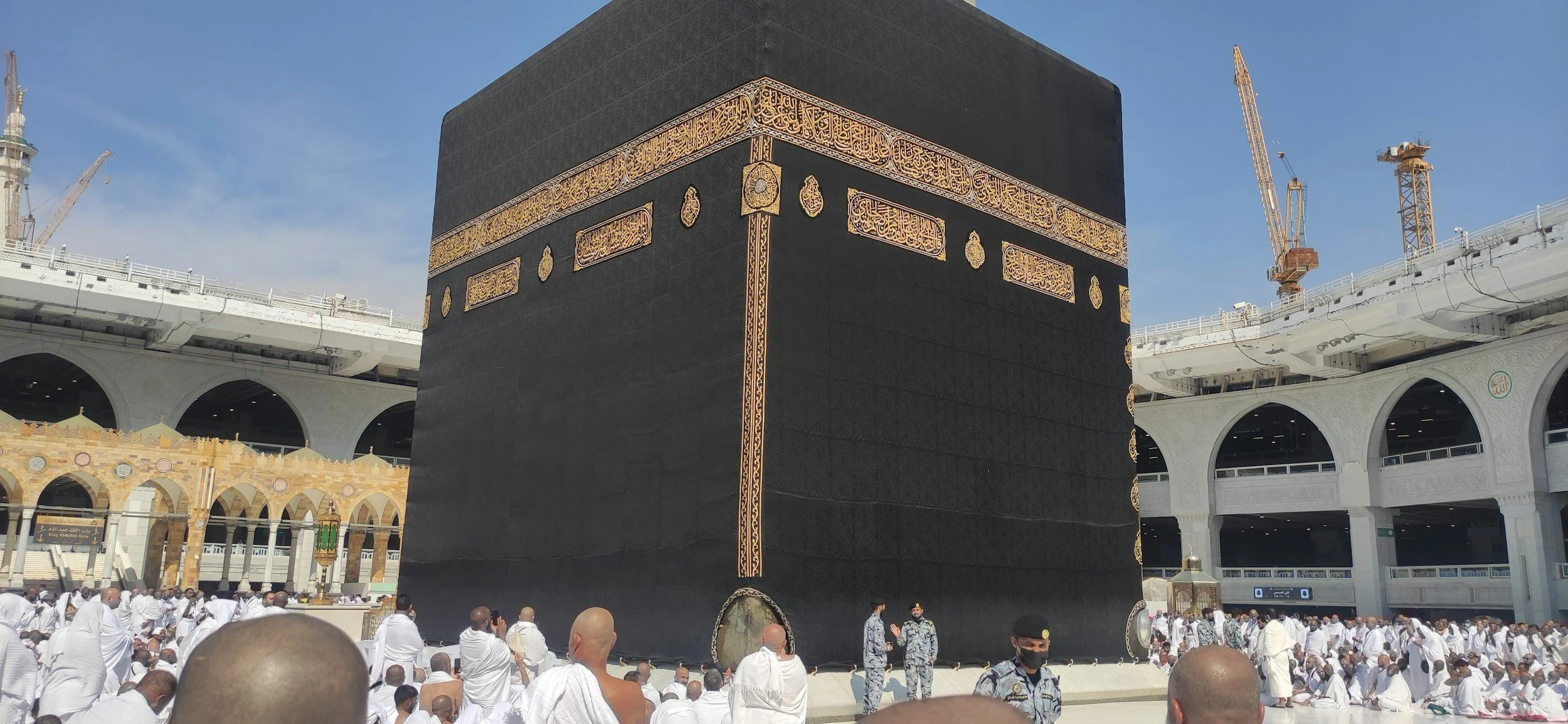
The recent release of the Epstein files has once again raised serious questions and widespread concern. This time, the revelations included several well-known public figures alongside numerous disturbing and puzzling details. One mention stood out: the reported gifting of a piece of the Kiswah of the Ka‘bah to the convicted occult paedophile Jeffrey Epstein.
Many Muslims on social media were left confused, unable to understand how such a sacred object could be associated with such a vile individual, or what the purpose behind this “gift” could have been. The lack of context has fuelled speculation, outrage, and misinformation.
This article examines the disturbing implications of this revelation, explores how such items circulate outside official religious channels, and considers alternative explanations behind how and why a sacred piece like the Kiswah could end up in the hands of someone like Epstein.
Why This was NOT Sent for Dawah Purposes
The idea that a piece of the Kiswah was sent to Jeffrey Epstein for Dawah purposes does not withstand scrutiny. Epstein was not a religious seeker, nor was he someone positioned to benefit spiritually from such a gesture. He functioned primarily as an intermediary, an operator connected to powerful individuals in Israel and elsewhere, rather than a figure of independent influence or moral authority. In that context, presenting him with a sacred religious item for guidance or outreach simply does not align with how Dawah is traditionally or logically conducted.

Moreover, the logistical and ceremonial effort required to obtain and transfer a piece of the Kiswah, an object of immense sanctity, would make little sense if the recipient was merely a facilitator with no meaningful standing in religious or spiritual matters. If any symbolic value were intended, it would more plausibly be directed toward those higher up the chain of influence rather than a figure. Sending such a revered cloth to someone widely associated with exploitation and moral corruption would neither serve Dawah nor justify the cost, effort, or breach of protocol involved.
The Ritual
To understand how evil operates among agents like Epstein, along with his handlers and clients, we must first examine the activities that took place and recognise them for what they were: atrocious, malicious, and deeply disturbing. These activities involved many innocent children, underage teenage girls and boys, including ritualistic or sacrificial ceremonies.
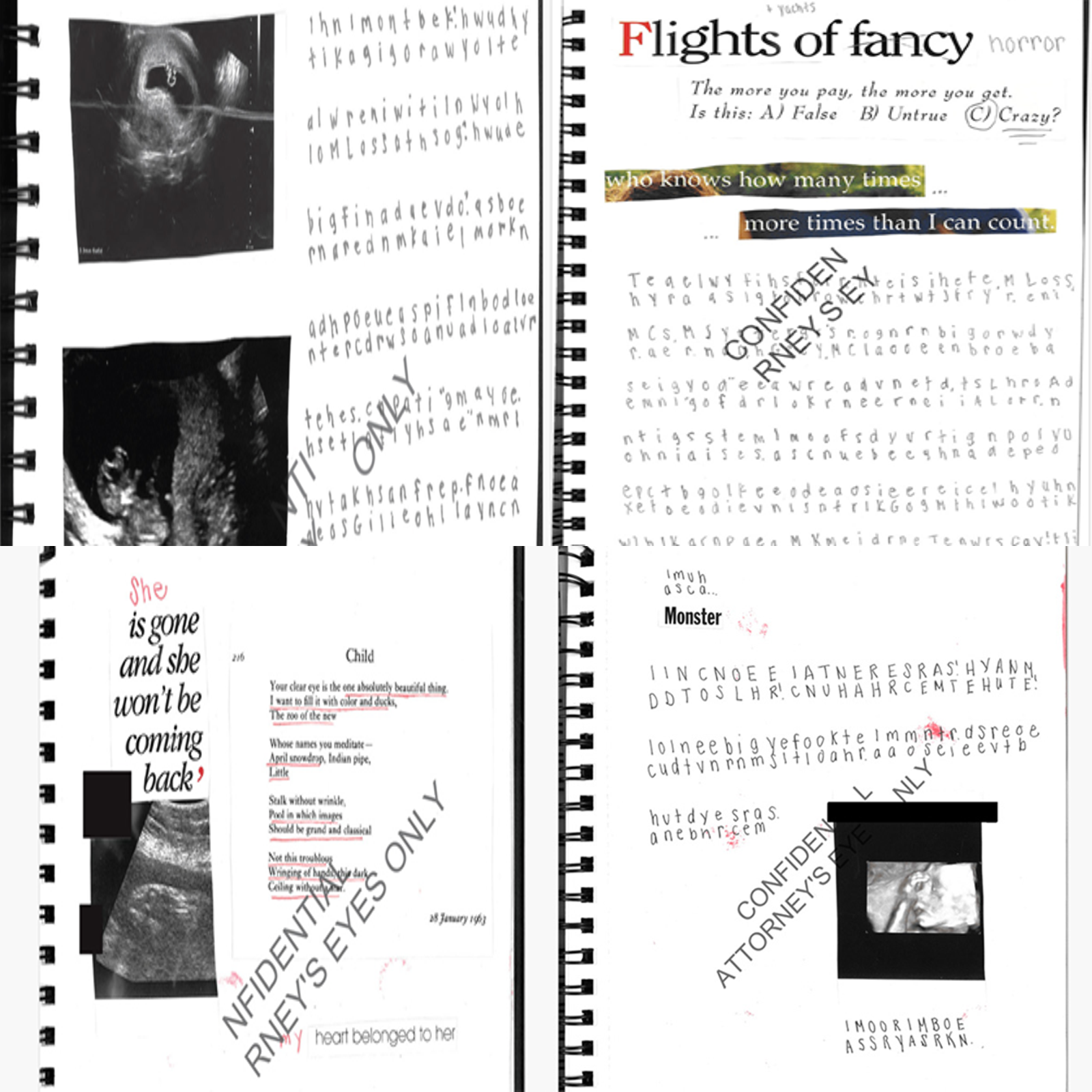
Certain documents suggest that babies were bred and never seen again, raising serious concerns about systematic exploitation. These accounts point towards disturbing activities such as psychological manipulation, ritualistic harm, and sacrificial practices.
From the material already circulated in relation to the Epstein case, it becomes evident that satanic occult practices appear to have been central to the operation. The journals and emails contain disturbing content, some written in cryptic language, others disturbingly explicit. Among the most unsettling references are those concerning the abduction of underage girls that were abused and used for pregnancy purposes.
As extreme as this may sound, similar claims have been widely discussed in connection with the case. Another alleged activity relates to cannibalism. While not as directly documented, some communications and emails have been interpreted by observers as containing coded references to such acts, often using terms like “jerky.” Due to the sensitive nature of these claims, details are not explored here, but documents including emails have been widely circulated and debated.
Further allegations of ritualistic behaviour are linked to locations associated with Epstein, including his island, mansion in New York, and private jet. Reports describe disturbing imagery, unusual equipment found, and materials that suggest involvement in deeply unethical and criminal practices.
Based on the available information, it is suggested that Epstein was heavily involved in occult-related activities and have been operating as part of a wider network. He appears to have functioned as an intermediary, a Mossad agent, facilitating harmful activities and drawing politicians and powerful people into them.
What about the Kiswah?
This raises the question: where does the Kiswah fit into all of this?
Among the materials reportedly linked to Epstein were various documents bearing different identities, including passports under fake names. One such document, a passport, was said to be Austrian, while listing a residence in Saudi Arabia, Dammam. Records also suggest that he operated under different roles as early as 1980s, indicating long-term movement across regions.
According to the leaked emails, Emirati businesswoman Aziza al-Ahmadi and Abdullah al-Maari were involved in organising and shipping three pieces of the Kiswah. The correspondence includes detailed logistical arrangements, including invoices, airline transport, customs clearance, delivery coordination, and confirmation that the shipment was sent to Epstein’s island. What makes this deeply disturbing is that these actions appear to have taken place well after Epstein’s conviction as a registered sex offender.
In one of the emails, Abdullah al-Maari explains the religious significance of the Kiswah to Muslims worldwide, almost as if emphasising its value and status. This adds another layer of concern, as it suggests that those involved were fully aware of the value and sanctity of what was being transferred.
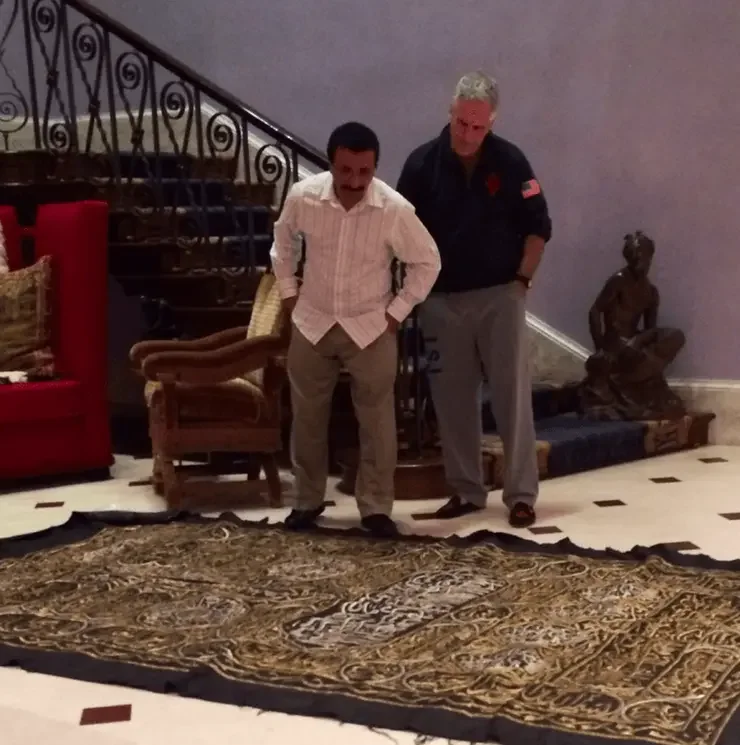
Another figure mentioned in connection with Epstein is Emirati businessman Sultan Ahmed bin Sulayem, who have been in close contact with Epstein both before and after his conviction. The emails indicate some level of familiarity between them, and a photograph has circulated showing them together, examining a piece of the Kiswah on the floor.
It remains unclear how Saudi Arabia may have been connected to the transfer of the Kiswah. However, the involvement from the region raises serious questions about how such a sacred item could leave Saudi Arabia and reach someone like Epstein and specifically his abhorrent island.
The Kiswah, although replaced annually, carries immense religious significance. It contains Qur’anic verses and represents one of the most sacred elements associated with the Ka‘bah. While the cloth itself is not an object of worship, the way it is handled reflects a level of respect owed to what it represents. Allowing such an item to reach individuals such as Epstein, who is associated with exploitation and the occult, raises ethical and spiritual concerns that cannot be ignored.
More broadly, this situation reflects a troubling reality: a decline in responsibility when it comes to safeguarding what is sacred. Whether one is discussing religious artefacts or human dignity, the failure to uphold trust and moral accountability has consequences.
If these claims are accurate, they point towards a pattern of long-standing activity for Israel, possible connections in the Middle East, and the development of networks involving influential figures. It is plausible that individuals in positions of power were either recruited, influenced, or compromised in ways that enabled these operations to continue.
What Was the Kiswah Used For in Epstein Island?
A deeply troubling question remains: once the Kiswah reached Epstein, what was it used for?
While there is no verified public evidence detailing its exact use, some Muslims have raised concerns based on the broader context of Epstein’s documented behaviour and associations. It has been suggested that, in occult practices, sacred objects are deliberately desecrated or degraded as part of ritualistic symbolism, the idea being that corrupting something pure holds symbolic or perceived ‘power.’ The occult members will then gain some sort of ‘power’ as a result of this activity.
If such an interpretation was plausible, it would add a disturbing layer to the entire situation. The Kiswah is not an ordinary cloth; it carries Qur’anic verses and represents the sanctity of the Ka‘bah. The mere possibility that it could have been handled in a degrading or disrespectful manner is, in itself, deeply unsettling.
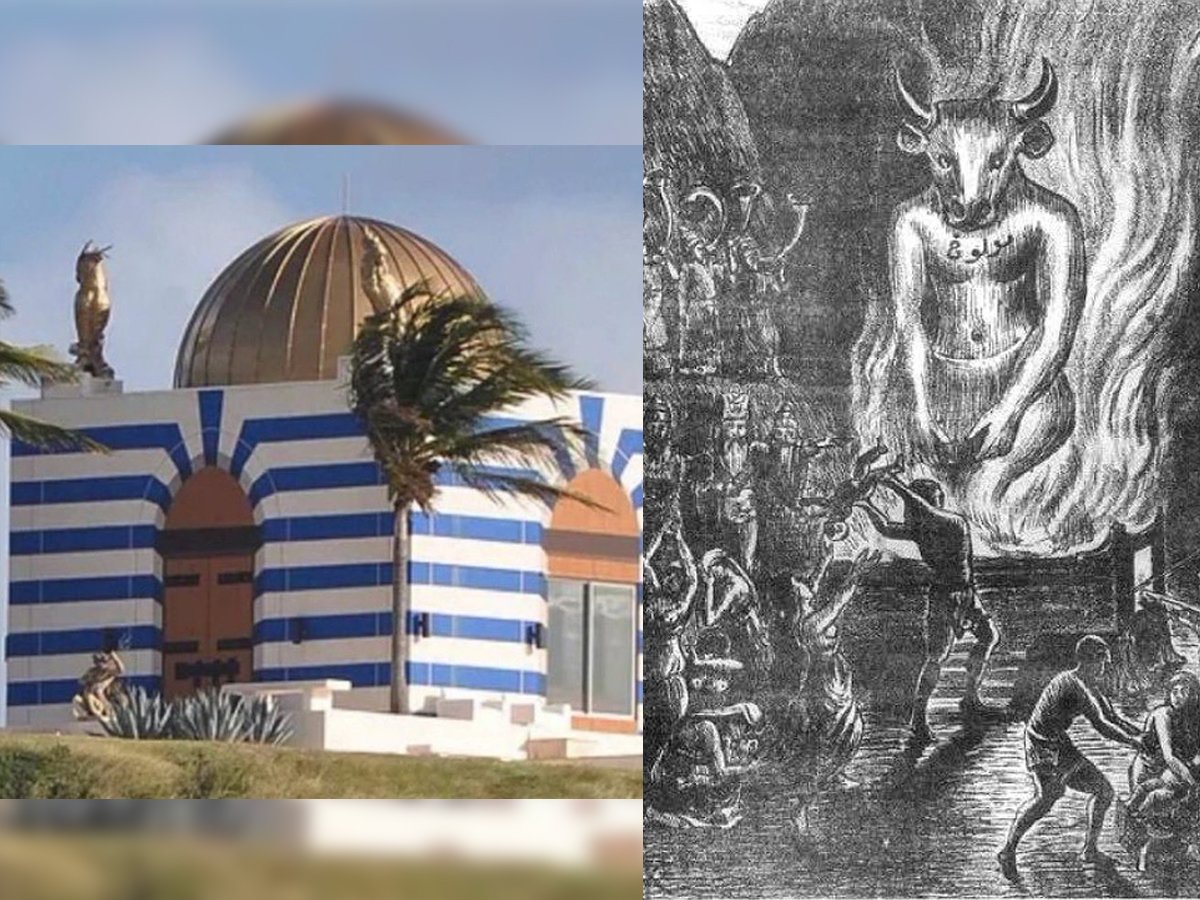
Whether or not such claims can be substantiated, the concern here is not speculation for its own sake, but the seriousness of allowing a sacred symbol of Islam to fall into environments where its dignity could be compromised.
The State of Muslims in the World
The Muslim Ummah has reached a state of weakness where even a sacred cloth cannot be protected, let alone Muslim lives in places like Gaza, Sudan, and India. This should force us to reflect deeply on our condition. When trust, responsibility, and honour are neglected, consequences follow.
What we are witnessing is not just a failure of systems, but a failure of values. Across parts of the Muslim world, corruption, moral compromise, and negligence have become normalised. The issue is not the cloth itself, but what it represents, a loss of responsibility, a loss of dignity, and a failure to safeguard what is sacred.
Allah ta’alah has already made it clear in the Qur’an and Sunnah that when injustice spreads and what is sacred is dishonoured, His punishment follows. History has shown this time and time again; nations rise in obedience and fall in فساد (corruption). While we do not know exactly when consequences will come, we know with certainty that such actions are not without accountability. These events are not random; they are warnings.
